
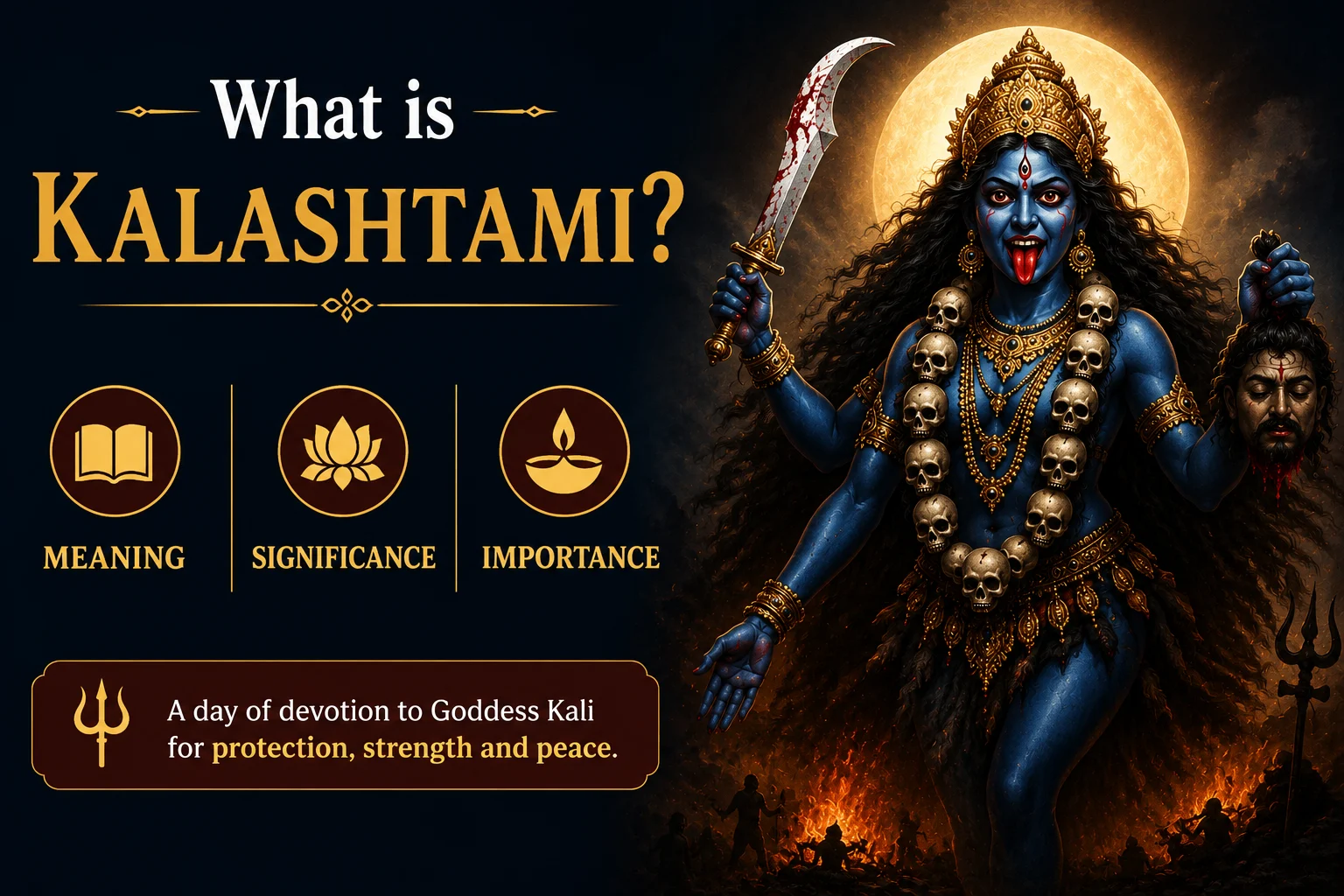
What is Kalashtami? Meaning, Significance, and Importance
 Byadmin
Have you ever noticed how certain days in the Hindu calendar carry a different kind of energy?
Not because something dramatic happens on the surface, but because generations before us treated those days with deep respect and devotion. Among such observances, Kalashtami is one such occasion.
Many people know it as a day dedicated to Lord Bhairav, while others observe it as a powerful fast for protection and spiritual growth. However, despite its importance, Kalashtami often remains less discussed than festivals like Navratri, Janmashtami, or Mahashivratri.
Interestingly, devotees of Lord Bhairav consider Kalashtami one of the most spiritually significant days of the month. It is believed to be a time when sincere prayers, discipline, and devotion can help remove obstacles, fears, and negative influences from life.
So, what exactly is Kalashtami? Why is it associated with Lord Bhairav? And why do thousands of devotees observe Kalashtami vrat every month?
Let’s explore the meaning, significance, and importance of this sacred occasion.
What is Kalashtami?
Kalashtami is a Hindu observance dedicated to Lord Bhairav, a fierce and powerful manifestation of Lord Shiva. It falls on the Ashtami Tithi (eighth day) of the Krishna Paksha, the waning phase of the Moon, every month.
The word “Kalashtami” combines two Sanskrit terms:
- Kala – Time, death, or the cosmic force governing destiny
- Ashtami – The eighth lunar day
Therefore, Kalashtami refers to the sacred eighth day associated with the worship of Kaal Bhairav, the guardian of time and protector of righteousness.
Unlike annual festivals that occur once a year, Kalashtami is observed every month. As a result, devotees get a regular opportunity to strengthen their spiritual practices and seek divine protection.
In fact, unlike annual celebrations that appear once in the Hindu festival calendar, Kalashtami is observed every month, giving devotees regular opportunities for prayer, fasting, and spiritual reflection.
Who is Lord Bhairav?
To understand Kalashtami, it helps to understand Lord Bhairav.
In Hindu tradition, Lord Bhairav is regarded as one of the most powerful forms of Lord Shiva. While Shiva is often worshipped as the compassionate and meditative deity, Bhairav represents his fierce, protective, and justice-oriented aspect.
Furthermore, ancient scriptures describe Bhairav as the destroyer of fear, ignorance, arrogance, and evil influences.
He is often depicted carrying symbolic weapons, accompanied by a dog, which is considered his sacred vehicle.
For devotees, Lord Bhairav worship is not about fear. Rather, it is about courage.
As a result, people pray to Bhairav when they seek protection from hidden enemies, uncertainties, recurring obstacles, and negative energies that seem difficult to explain.
The Story Behind Kalashtami
According to the legend, Lord Brahma once became arrogant and claimed superiority over other deities. Consequently, to restore cosmic balance, Lord Shiva manifested as Bhairav.
Bhairav appeared in a fierce form and humbled Brahma, teaching the importance of truth and humility.
Over time, devotees began observing Kalashtami as a day dedicated to honoring this powerful form of Shiva and seeking his blessings for protection, wisdom, and spiritual discipline.
Why is Kalashtami Important?
Many Hindu observances focus on prosperity, relationships, or material well-being. In contrast, Kalashtami carries a slightly different purpose.
It is often associated with inner transformation.
People observe Kalashtami because they believe it helps them:
- Overcome fears and insecurities
- Remove negative influences
- Develop spiritual strength
- Improve self-discipline
- Seek protection from unforeseen challenges
- Gain clarity during difficult phases of life
Moreover, in traditional belief systems, Lord Bhairav is considered the protector of sacred spaces and the guardian of dharma. His blessings are sought not only for safety but also for courage and wisdom.
There is something deeply comforting about the idea that divine protection exists even during uncertain times.
Perhaps, that is one reason why Kalashtami continues to hold relevance in modern life.
What is Kalashtami Vrat?
One of the most important aspects of this observance is the Kalashtami vrat.
The word “vrat” means a sacred vow or disciplined spiritual practice. On Kalashtami, devotees observe fasting while dedicating the day to prayer, meditation, and devotion to Lord Bhairav.
Different people follow the vrat in different ways.
For example, some observe a complete fast and consume only water.
Others take fruits, milk, or simple sattvic foods.
However, the purpose of Kalashtami fasting is not merely dietary restriction. Instead, it is seen as a way to cultivate self-control and focus the mind on spiritual practices.
Additionally, many devotees spend the day chanting Bhairav mantras, visiting temples, and performing special prayers.
Kalashtami Puja: How Devotees Worship Lord Bhairav
The Kalashtami puja is performed with sincerity and devotion rather than elaborate rituals.
Although traditions may vary across regions, some common practices include:
Cleaning and Preparing the Worship Space
Devotees begin by cleaning their homes and prayer areas.
This is because the act symbolizes removing negativity and creating a pure environment for worship.
Offering Flowers and Lamps
Fresh flowers, incense, and oil lamps are offered to Lord Bhairav.
Likewise, the lighting of a lamp is believed to symbolize the removal of darkness and ignorance.
Chanting Bhairav Mantras
Mantra chanting forms an important part of Kalashtami worship.
Many devotees recite:
- Om Kaalabhairavaya Namah
- Bhairav Ashtakam
- Kaal Bhairav Stotram
Through these prayers, devotees believe they can invoke divine protection and blessings.
Feeding Dogs
One unique Kalashtami ritual involves feeding dogs.
Since the dog is considered the sacred vehicle of Lord Bhairav, devotees offer food as an act of devotion and compassion.
Even today, this remains one of the most widely followed traditions associated with Kalashtami.
The Spiritual Significance of Kalashtami
At first glance, Kalashtami may seem like another religious observance on the calendar.
However, when you look deeper, it reflects something very human.
Everyone faces fear.
Fear of failure.
Fear of uncertainty.
Fear of losing what matters most.
In this context, the symbolism of Lord Bhairav addresses these emotions directly.
He represents the courage required to face life’s darker moments instead of running away from them.
Because of this, many spiritual seekers view Kalashtami as a day for introspection.
A day to confront inner weaknesses.
A day to let go of unnecessary anxieties.
And a day to remember that strength often comes from within.
Kalashtami and Kaal Bhairav Jayanti: Are They the Same?
This question creates confusion for many devotees.
The simple answer is no.
Kalashtami occurs every month on Krishna Paksha Ashtami.
On the other hand, Kaal Bhairav Jayanti is the annual celebration marking the appearance day of Lord Kaal Bhairav.
You can think of it this way:
- Kalashtami – Monthly observance
- Kaal Bhairav Jayanti – Annual festival celebrating Lord Bhairav’s manifestation
Both are dedicated to Lord Bhairav, but Kaal Bhairav Jayanti holds special significance because it commemorates his divine birth.
Therefore, while both occasions are important in the Hindu festival calendar, Kalashtami is observed every month, whereas Kaal Bhairav Jayanti is celebrated once a year.
Benefits Associated with Kalashtami Worship
Traditional beliefs attribute several spiritual benefits to Kalashtami worship.
These include:
Protection from Negative Influences
Devotees believe Lord Bhairav helps protect them from harmful energies and unseen obstacles.
Greater Mental Strength
Additionally, regular observance of Kalashtami fasting encourages discipline and resilience.
Removal of Fear
Similarly, Bhairav is often worshipped as the remover of fear and insecurity.
Spiritual Growth
Prayer, fasting, and meditation create opportunities for self-reflection and spiritual progress.
Improved Focus and Clarity
As a result, many devotees report feeling calmer and more centered after observing the vrat and performing prayers.
Of course, spiritual experiences differ from person to person. Nevertheless, the real value often lies in the consistency of practice and the mindset developed through devotion.
Who Can Observe Kalashtami?
One of the beautiful aspects of Kalashtami is its accessibility.
In fact, there are no strict barriers based on age, profession, or social status.
Anyone who wishes to seek Lord Bhairav’s blessings can participate.
Some people observe the vrat every month.
Others perform Kalashtami puja only during important phases of life.
Meanwhile, many simply spend a few moments in prayer and reflection.
Ultimately, the sincerity behind the practice matters far more than its complexity.
Kalashtami in Modern Times
Life today moves quickly.
Deadlines replace rituals.
Notifications replace moments of silence.
Yet, many people continue observing Kalashtami because it offers something increasingly rare—a pause.
A reason to step away from daily chaos.
A chance to reconnect with faith.
And an opportunity to reflect on personal challenges with a calmer mind.
Whether viewed through a spiritual lens or a psychological one, the practice encourages mindfulness, discipline, and self-awareness.
As a result, those qualities remain valuable regardless of the era.
Understanding the Deeper Meaning of Kalashtami
At its core, Kalashtami is not merely about fasting or rituals.
Rather, it is about acknowledging that life includes both light and darkness.
Lord Bhairav symbolizes the strength needed to navigate difficult phases without losing faith.
Ultimately, the observance reminds devotees that challenges are temporary, fear can be overcome, and spiritual discipline often becomes a source of inner power.
Indeed, that message feels just as relevant today as it did centuries ago.
Final Thoughts
When people ask, “What is Kalashtami?”, the answer goes beyond a date on the Hindu calendar.
Instead, it is a sacred observance dedicated to Lord Bhairav, a powerful form of Lord Shiva who represents protection, courage, justice, and spiritual strength.
Through these practices, including Kalashtami vrat, Kalashtami puja, devotional prayers, and mindful reflection, devotees seek blessings that help them navigate life’s uncertainties with greater confidence and faith.