
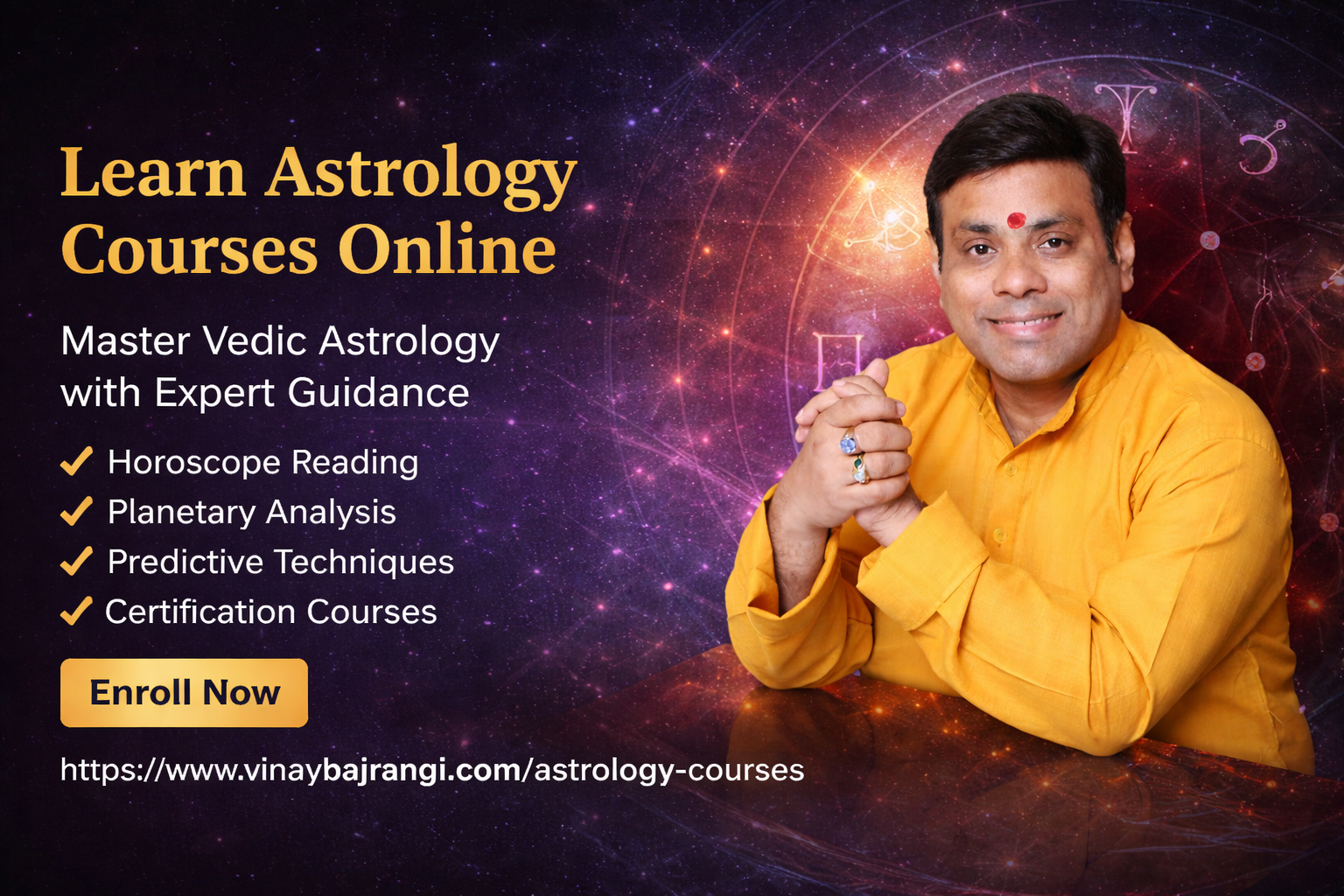
Astrology Courses Explore Vedic Astrology with Jyotish Ankur

Astrology courses can provide a structured way to understand the principles of Vedic astrology, planetary influences, zodiac signs, houses, nakshatras, and horoscope interpretation. For beginners, learning astrology through a systematic course can make complex concepts easier to understand and apply. For serious learners, structured training can help develop a stronger foundation for analysing birth charts and understanding traditional Jyotish techniques.
If you want to move beyond casual astrology reading and develop practical knowledge, choosing the right learning programme matters. A well-designed course should explain fundamental concepts step by step while gradually introducing horoscope analysis, planetary combinations, timing techniques, and practical interpretation.
A structured learning approach can also help students avoid confusion caused by learning isolated concepts from different sources. With proper guidance, learners can progress from basic terminology to more advanced chart interpretation at a comfortable pace.
Why Choose Structured Astrology Courses?
Learning astrology requires more than memorising planetary meanings or zodiac characteristics. A horoscope contains several interconnected factors, and understanding how these factors work together requires systematic study.
Well-structured astrology courses generally introduce concepts in a logical sequence. Students can first learn about planets and signs, then understand houses, aspects, nakshatras, planetary relationships, and other important principles before moving towards complete horoscope analysis.
This approach is particularly useful for beginners because it creates a clear learning path. Instead of trying to understand advanced combinations immediately, students can build their knowledge gradually.
Structured learning can also be valuable for individuals who have already studied astrology independently but want to organise their existing knowledge and develop a more practical approach.
Build a Strong Foundation in Vedic Astrology
The foundation of Jyotish begins with understanding its basic building blocks. These include the nine traditionally considered planets, twelve zodiac signs, twelve houses, nakshatras, ascendant, planetary strengths, and relationships between different chart factors.
Astrology courses can introduce these subjects through organised lessons so learners understand not only what each element represents but also how it contributes to horoscope interpretation.
For example, knowing the general significance of Mars is only the beginning. Its placement, sign, house, aspects, conjunctions, strength, and relationship with other planets can influence how its role is interpreted in a particular horoscope.
This is why practical learning is important. Astrology is not simply about assigning one meaning to one planet. It involves observing several factors together.
Learn Horoscope Analysis Step by Step
Horoscope analysis is one of the most important skills for anyone seriously interested in Jyotish. However, beginners may initially find birth charts complicated because multiple planetary positions appear simultaneously.
A good learning programme can simplify this process by teaching students how to approach a horoscope systematically.
A typical learning progression may include:
- Understanding the ascendant and its importance
- Studying the twelve houses
- Learning planetary significations
- Understanding zodiac signs and their characteristics
- Studying planetary relationships
- Exploring aspects and conjunctions
- Understanding nakshatras
- Learning important planetary combinations
- Studying divisional charts where appropriate
- Exploring timing methods
- Practising complete horoscope interpretation
This gradual process can help students become more comfortable with chart analysis and develop their own interpretive discipline.
Learn with Jyotish Ankur
For learners looking for a structured introduction to Jyotish, Jyotish Ankur can be considered as a learning pathway focused on developing fundamental astrology knowledge.
The concept of Jyotish Ankur represents the early stage of learning, where students establish the foundation needed for deeper study. This makes it suitable for individuals who want to begin their astrology journey with organised lessons rather than scattered information.
A beginner-friendly approach can help students understand the language of astrology before attempting complicated predictive techniques. Once the basic principles become clear, learners can gradually explore more detailed areas of horoscope interpretation.
The objective should be to develop understanding rather than simply memorising definitions.
What Can You Learn Through Astrology Courses?
The subjects covered can vary depending on the level and structure of a programme. However, comprehensive astrology courses may introduce learners to several important areas.
Planets and Their Significations
Students can learn the traditional significance of the Sun, Moon, Mars, Mercury, Jupiter, Venus, Saturn, Rahu, and Ketu. Understanding their general characteristics provides the foundation for interpreting their influence in a horoscope.
Zodiac Signs
The twelve signs form an important part of chart interpretation. Students can study their characteristics, elements, modalities, planetary ownership, and relationship with different planets.
Houses
The twelve houses represent different areas of life, including personality, wealth, communication, family, education, career, relationships, health, spirituality, and other themes.
Understanding houses helps learners connect planetary placements with specific life areas.
Ascendant
The ascendant provides an important reference point for horoscope analysis. Learning how to identify and interpret the ascendant can help students understand the overall structure of a birth chart.
Nakshatras
Nakshatras add another layer to Vedic astrology. Their characteristics and planetary associations can contribute additional information during horoscope interpretation.
Planetary Combinations
Students can gradually learn how different planetary relationships and combinations are interpreted. This area requires careful study because the same combination may not produce identical interpretations in every horoscope.
Timing Techniques
More advanced learning may introduce traditional timing methods used to assess periods and potential developments. These techniques require a strong foundation before they can be applied responsibly.
Why Practical Learning Matters
One of the biggest challenges in astrology education is the difference between theoretical knowledge and practical interpretation.
A learner may remember the meanings of all planets but still struggle to interpret a complete birth chart. Practical exercises can help bridge this gap.
By studying sample horoscopes and observing how different factors interact, students can gradually learn how to prioritise relevant information.
Practical learning can also teach students that astrology interpretation should not depend on one isolated placement. A responsible analysis considers the broader chart context.
This method encourages deeper thinking and helps learners develop a more balanced approach to Jyotish.
Astrology Courses for Beginners and Serious Learners
Not everyone begins with the same level of knowledge. Some students may be completely new to astrology, while others may already know basic planetary and zodiac concepts.
For beginners, the priority should be clarity. Lessons should explain terminology in simple language and introduce concepts in a logical order.
For experienced learners, the focus can shift towards interpretation, advanced techniques, chart comparison, timing methods, and practical case studies.
Therefore, when selecting astrology courses, learners should consider the course structure, learning level, practical components, and subjects covered rather than choosing only on the basis of popularity.
How to Choose the Right Astrology Course
Choosing the right course can make the learning journey more organised and productive. Before enrolling, consider the following factors:
1. Course Structure
Look for a clearly organised curriculum that progresses from fundamental concepts to advanced subjects.
2. Practical Application
A course should ideally include opportunities to understand how theoretical principles are applied to actual horoscope analysis.
3. Beginner-Friendly Lessons
If you are new to astrology, choose a programme that does not assume extensive prior knowledge.
4. Progressive Learning
Advanced concepts should be introduced only after students understand the required fundamentals.
5. Traditional Jyotish Principles
If your interest is Vedic astrology, ensure that the programme focuses on the principles and techniques relevant to Jyotish.
6. Learning Objectives
Know what you want to achieve before enrolling. Your objective may be personal learning, deeper Jyotish study, horoscope interpretation, or professional development.
Develop Your Astrology Knowledge with Consistent Practice
Astrology learning does not end when a lesson is completed. Consistent practice plays an important role in developing interpretation skills.
Students can revise planetary significations, study different ascendants, analyse house placements, compare planetary combinations, and practise reading complete charts.
Keeping notes can also help. Creating a personal reference system for planets, houses, signs, nakshatras, and important combinations can make revision easier.
The more systematically a learner approaches the subject, the easier it becomes to identify relationships between different chart factors.
Is Learning Astrology Online a Good Option?
Online learning offers flexibility for students who may not be able to attend traditional classroom sessions. Learners can study according to their schedules and revisit lessons when required.
For working professionals, students, and individuals with other responsibilities, online astrology courses can provide a convenient way to develop Jyotish knowledge without changing their daily routine.
However, convenience should be combined with discipline. Regular study, revision, and practical exercises are important for making meaningful progress.
Turn Your Interest in Astrology into Structured Learning
Many people become interested in astrology after reading horoscopes or exploring their own birth charts. While curiosity is a good starting point, systematic education can take that interest further.
Instead of relying entirely on general predictions, learners can develop an understanding of how astrologers examine planets, houses, signs, nakshatras, combinations, and timing techniques.
This transition from curiosity to structured learning is where a well-planned astrology education can become valuable.
If you are ready to begin learning Jyotish in an organised manner, exploring suitable astrology courses can be the next step. A strong foundation can help you approach horoscope interpretation with greater clarity and confidence.
Start Your Jyotish Learning Journey
Learning astrology is a gradual process. There is no need to understand every advanced technique at the beginning. The better approach is to start with fundamentals, strengthen your understanding through practice, and gradually move towards more complex concepts.
For beginners, Jyotish Ankur can represent the foundation stage of this learning journey. With consistent study and practical application, learners can build the knowledge required for deeper exploration of Vedic astrology.
If your goal is to learn astrology systematically rather than simply collect information, choosing suitable astrology courses can provide a clear direction.
Start learning, build your foundation, practise horoscope analysis, and take your interest in Jyotish towards a more structured level.
Final Thoughts
The right astrology education can transform casual interest into structured knowledge. By starting with fundamentals and gradually developing practical interpretation skills, learners can create a stronger foundation for studying Vedic astrology.
Whether you are beginning with Jyotish Ankur or looking to expand your existing understanding, the key is consistent learning, revision, and practical application.
Explore the available astrology courses, choose the learning path that matches your goals, and begin building your Jyotish knowledge step by step.